
Most sleep advice tells you to stop thinking at night. Very few explain how to actually do it.
The problem for a lot of men in their 40s isn’t physical exhaustion — it’s mental load. Unresolved problems. Decisions not yet made. Things the brain refuses to drop even when the body is ready to rest. Learning how to quiet your mind before sleep is less about relaxation techniques and more about giving the brain a legitimate reason to let go.
This is what worked for me — and the mechanism behind why it works.
The problem with unresolved thoughts at night
There is a specific kind of tired that doesn’t lead to sleep. The body is done, but something in the mind is still running — a problem without a resolution, a decision not yet made, a conversation that didn’t land the way it should have.
Ignoring it doesn’t work. The thought comes back. Distraction helps temporarily, but the moment the screen goes off the loop resumes. The issue isn’t that the brain is overactive. It’s that the brain is doing exactly what it’s designed to do: monitor unfinished tasks until they’re resolved.
This is known as the Zeigarnik effect — the tendency for incomplete tasks to remain active in working memory. The brain doesn’t stop holding a problem until it believes the problem is handled.
Why handoff works better than journaling
Journaling is the standard recommendation for racing thoughts at night. It helps some people — but for many, writing the problem down just keeps it alive in a different form. The issue is still yours to hold. The notebook doesn’t take responsibility for it.
What the research on the Zeigarnik effect also shows is that the brain doesn’t require a problem to be solved to release it. It requires a plan — or a handoff. The monitoring stops when the brain believes something else is now responsible.
That distinction changes everything about how to approach mental load before sleep. The goal isn’t to empty your mind. It’s to transfer ownership of what’s in it.
How I use AI as a cognitive offload tool
On evenings when something is unresolved, I open a chat with AI before bed. I write out the problem fully and honestly — the way you’d explain it to someone with no prior context. I describe what I know, what I don’t know, what I’ve already considered. I ask for a reframe, some structure, possible angles I haven’t seen.
Then I close the screen and go to sleep — often before the response even loads.
It works not because the AI solves anything, but because the act of writing the problem out transfers responsibility. It is no longer sitting in my head waiting for attention. Something else is holding it. The monitoring stops. The same mental loop that drives 3am wake-ups has nowhere left to run.
In the morning I read the response with fresh eyes and a rested mind. Sometimes it’s directly useful. Sometimes it just reflects my own thinking back more clearly. Either way — I slept.
The principle behind the practice
This isn’t about AI specifically. The tool matters less than the mechanism. What matters is that the brain receives a clear signal: this problem has been handed over. You are no longer responsible for holding it tonight.
Writing the problem out fully also does something independent of the handoff — it forces a circular, anxious loop into structured language. Articulating a problem precisely tends to shrink it. The version of a problem that runs in your head at 11pm is almost always larger than the version that exists on a screen.
The morning version is smaller still. Not because anything changed overnight, but because a rested mind reads things differently than a tired one running its fourth loop on the same thought. Building a stable sleep system starts with removing the reasons the mind won’t settle — and unresolved mental load is one of the most common ones.
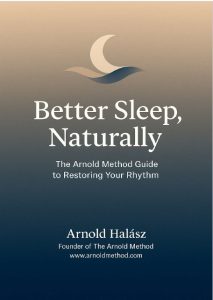
If you want a structured way to approach this
The Sleep Reset eBook breaks this process down into a clear, step-by-step system. Instead of guessing what matters, it gives you a framework to stabilise your sleep pattern over a short period.
Frequently asked questions
Does this only work with AI, or can I use another tool?
The tool is secondary. What matters is the handoff — transferring responsibility for the problem to something outside your own head. AI works particularly well because it responds, structures, and holds the content actively. A detailed note to a trusted person or a voice memo to yourself can produce a similar effect if the intention is genuine transfer rather than just recording.
What if I check the AI response before sleeping and it makes me more anxious?
Don’t read it before sleep. Write the prompt, close the screen, and read the response in the morning. The value is in the sending, not the receiving. If checking it feels compulsive, that’s a sign the handoff wasn’t complete — try writing more specifically until the problem feels genuinely placed outside yourself.
Is this the same as the Zeigarnik effect?
Yes, directly. The Zeigarnik effect describes how unfinished tasks stay active in working memory. The related research shows that a credible plan or handoff — not completion — is what releases the brain’s hold on the task. Writing a detailed prompt to AI functions as that handoff for most people who try it consistently.
How is this different from general sleep hygiene advice?
Standard sleep hygiene focuses on environment and behaviour — screens off, consistent bedtime, dark room. Those things matter, but they don’t address cognitive load directly. This approach targets the specific mechanism that keeps mentally active people awake: the brain’s refusal to stop monitoring unresolved problems. It works alongside good sleep habits, not instead of them.