Presence sounds like a parenting topic, or a relationship one. It’s really a sleep topic — and a predictable one, once you know what to look for. I only found the sleep debt and presence connection by tracing my worst moments backward, not by planning to look for it.
Two Ways Tiredness Shows Up
A tired mind looks for something to keep it awake. For a lot of people that means checking the phone too often — a chat, a video someone sent, looked at in the middle of a conversation instead of actually being with the people in front of them. Without that, the same tiredness goes a different way: foggy, distracted, quick to get annoyed over something small. Both come from the same problem. One looks for something to wake it up. The other just runs out of attention and can’t stay present at all.
Different People, Same Pattern
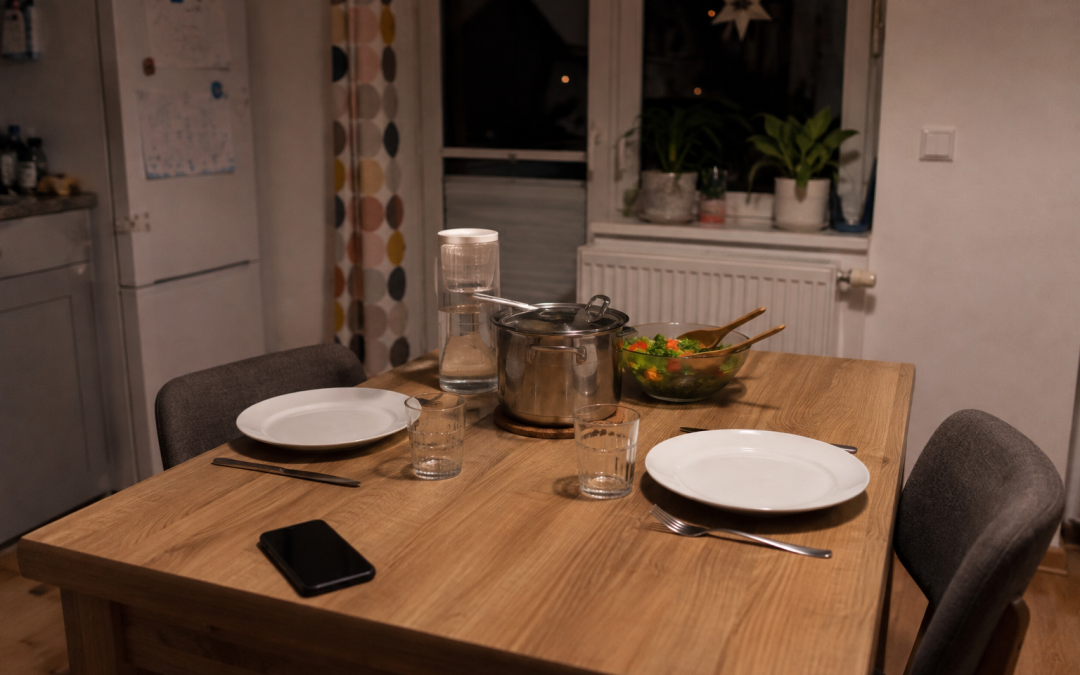
I don’t remember one specific evening. It’s more a feeling that keeps coming back, and not just in one kind of relationship. At dinner with my son, right when he needs my full attention. With friends, checking my phone too often instead of enjoying the people around me. Visiting a parent, looking at a screen after just a few sentences, not really trying to connect anymore, and getting annoyed if someone suggests it matters, even though it does. Different people, same pattern.
When I trace it back, it’s always connected to not enough sleep. Either my mind is tired enough that it just can’t hold steady attention on one thing, or it’s tired enough that it goes looking for something to wake it up.
Two Kinds of Rest
It took me a while to notice that two kinds of rest do very different things to a tired mind. Looking at a screen means almost no movement, but the body still ends up feeling heavier for it — legs and arms heavy, and when you finally stand up, it feels like you aged twenty years in one hour. The mind feels empty, and the instinct is to look for something even more exciting — surely that will give me the energy I’m missing. It doesn’t. A real nap does something completely different to the same still body. Eyes closed, whether it becomes actual meditation or just light, easy dreams, the nervous system really gets to rest. There’s no tension left over from being excited by a screen. Twenty to sixty minutes of doing nothing, and it’s almost like getting half a day back — especially useful for someone like me, an early riser who does most of the real living in the first half of the day anyway.
Choosing It, Even While Traveling
It isn’t a rule I follow, but I choose it more and more often when I have the chance. Even while traveling — instead of turning on a podcast to stay awake enough to drive safely, I stop somewhere quiet, lie down for twenty or thirty minutes, and drive the rest of the way without needing speed or noise to stay focused. This happens most often after a hard training session, which isn’t that often anymore. The nap doesn’t always follow. But when it does, I usually know why I needed it.
None of this gets fixed in the moment it shows up — not at the dinner table, not in the middle of a conversation with a friend, not during a visit that’s already happening. By the time I notice I’m irritated or distracted, the missing sleep behind it happened earlier — sometimes hours earlier, sometimes the day before. That’s where the real fix has to happen instead: choosing twenty real minutes of rest over the hour that only looks like rest. And on the days I haven’t had those twenty minutes, I have to accept that being fully present is just going to be harder.
You can’t force yourself to be present at the table. You can only show up already rested enough for it to happen naturally.
If you want a structured way to approach this
The Sleep Reset eBook breaks this process down into a clear, step-by-step system. Instead of guessing what matters, it gives you a framework to stabilise your sleep pattern over a short period.
Frequently asked questions
Why do I feel more tired after scrolling on my phone than before?
Screen time involves almost no physical movement but keeps the mind stimulated, which isn’t the same as rest. Many people report feeling heavier or more depleted afterward rather than refreshed, since the nervous system hasn’t actually had a chance to settle.
How long should a nap be to actually help?
Research on short naps generally points to 10 to 30 minutes as the effective range — long enough to boost alertness and performance, short enough to avoid the grogginess that comes from waking out of deeper sleep. Longer naps can still be useful but carry a higher risk of that groggy “sleep inertia” feeling afterward.
Can lack of sleep make someone more irritable with people they love?
Yes — reduced sleep is consistently linked to shorter patience and quicker frustration over minor things, even when the person isn’t consciously aware of why they’re reacting that way. It often shows up as behavior first, before it registers as tiredness.
Is it better to nap or push through tiredness with caffeine or stimulation?
For most people, a short nap addresses the underlying tiredness rather than masking it, while caffeine or stimulation only delays the crash. Neither is inherently wrong, but they solve different problems — one buys time, the other actually reduces the sleep debt.