Most men who train seriously into their forties don’t stop caring about performance. They stop being able to pretend the old approach still works the same way. The training plan that used to be a contract — intervals on Tuesday regardless of how Tuesday felt — quietly becomes a suggestion. Not because discipline disappeared, but because experience replaced it.
Training after 40 doesn’t have to mean doing less. It means doing differently. This is what that shift actually looks like from the inside, and why it produces better results than forcing the old model onto a body that has moved on.
When the training plan stops being a contract
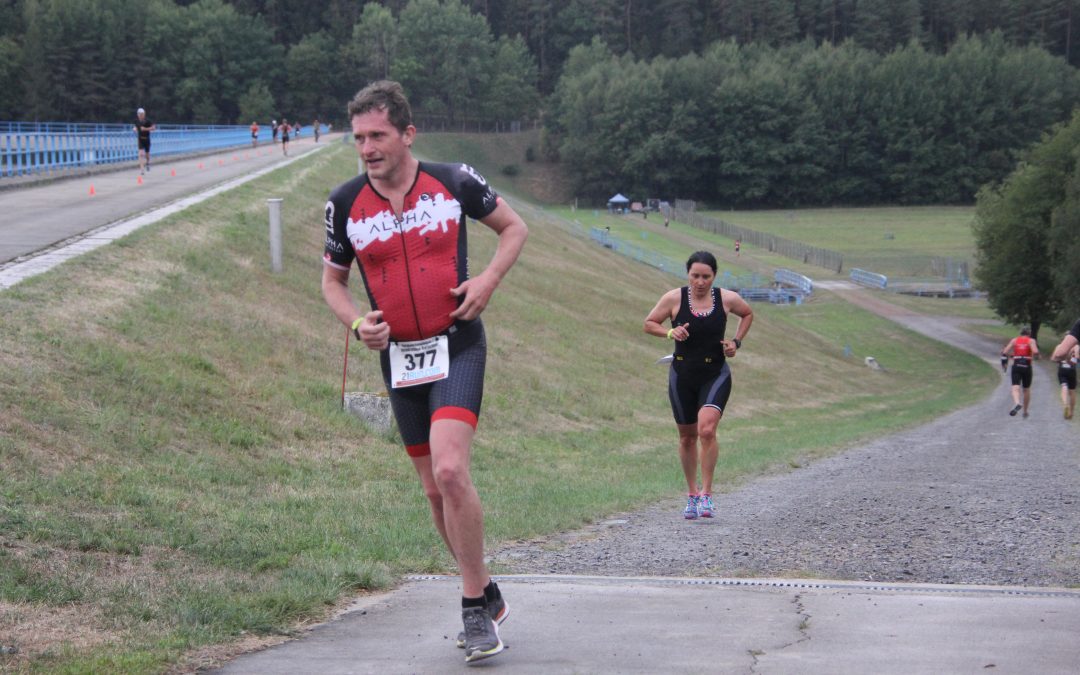
For most of the years I raced seriously, the plan was the plan. If it said intervals, I ran intervals — tired, under-recovered, slightly ill, it didn’t matter much. The calendar existed to get me to the start line in the best possible shape, and deviating from it felt like a small failure of commitment.
The calculation started changing in my forties. An interval session forced on a body that isn’t ready produces less than a slightly delayed session done properly. One more easy day before the hard day isn’t weakness — it’s the difference between a session that builds something and a session that just costs something. I started reading my own state more carefully, adjusting around it rather than overriding it.
This isn’t intuitive for men who have trained with structure for years. The instinct is to treat flexibility as softness. But the same periodisation logic that applies to training weeks applies to daily decisions — a hard session on a depleted system doesn’t produce adaptation, it produces debt. Most of the time the plan doesn’t fail on volume or intensity. It fails on weeks that quietly don’t happen.
What changes when racing stops being the frame
An autoimmune condition forced me out of racing, particularly the water disciplines, and the calendar that had structured my year for so long quietly disappeared. That was harder than I expected. I hadn’t realised how much of my identity was organised around preparing for something. Without the race season as the frame, the question changed entirely — not “how do I peak for October” but “how do I stay in a state where I can train well for most of the year.”
The answer looks different from the old model. Most of the year at a load I can recover from. One stronger week per month. A few genuine peaks for team events or occasions that matter. Not maximising any single variable but keeping everything moving without accumulating debt I can’t repay.
The shift also changed how sleep fits into the equation. Deep sleep is where physical recovery actually happens — and a training load that consistently exceeds recovery capacity is one of the most reliable ways to compress it. Managing load isn’t just about performance. It’s about protecting the recovery that makes the next session possible.
The body the racing years built — and what it missed
Four disciplines — swimming, cycling, kayaking, running — sounds like variety. And it is, compared to most. But when I started spending more time in the garden, paragliding, climbing for the pleasure of it, doing things with my son that required different movement entirely — I found gaps I hadn’t known existed. Thirty minutes of digging left my lower back and forearms more honestly tired than a hundred-kilometre ride had in years. Small muscles, forgotten joints, ranges of motion that had quietly shortened while I was efficiently training the same patterns over and over.
That was the honest signal. I had built a capable but quite specific body. Some of it transferred to real life. Some of it didn’t. So I started treating the body as a whole rather than as a racing tool. More strength work. More variety in movement. The sport-specific sessions are still there — I can still get close to the tempo I held five or six years ago, though it takes more mental effort and the recovery demands more respect.
Speed has softened more than endurance. The version of me from five years ago would probably still win a friendly sprint. But the system that supports training — sleep, recovery, daily structure — is more deliberately managed now than it ever was during the racing years, and the results are more consistent because of it.
Training as stewardship
The word that fits best now is stewardship. Not performance, not optimisation, not even fitness in the conventional sense. Stewardship of a body I want to still be using well into my sixties — for gardens and mountains and my son and races when they come.
That means the hard sessions still happen. The intervals still hurt. The commitment is real. But the decision to push through or step back is a considered one rather than a reflexive one. Tracking helps make that decision less subjective — when the data shows the system hasn’t recovered, the choice to take an easier day isn’t a failure of discipline. It’s the discipline.
The man I was at 39 still shows up when the intervals begin. He’s useful there — the memory of what hard effort feels like, the knowledge that the suffering is survivable. He just doesn’t get the final vote anymore. The final vote goes to the version of me that has to train again tomorrow, and the day after, and the year after that.
If you want a structured way to approach this
The Sleep Reset eBook breaks this process down into a clear, step-by-step system. Instead of guessing what matters, it gives you a framework to stabilise your sleep pattern over a short period.
Frequently asked questions
Is it normal for training to feel harder after 40?
Yes — and the reasons are specific. Recovery takes longer as adenosine sensitivity and hormonal profiles shift. Speed and power decline faster than endurance. The nervous system needs more time between hard sessions. None of this means training becomes less effective — it means the structure around training needs to be more deliberate than it was at thirty. Flexibility in the plan is not softness. It is a more accurate reading of what the body can actually use.
How should training change after 40?
The most consistent shift that produces results is moving from a fixed plan to a responsive one — using current recovery state, sleep quality, and energy as inputs to the day’s session rather than following a predetermined structure regardless of how the body is presenting. This doesn’t mean abandoning structure. It means treating the plan as a guide and the body as the final arbiter of what’s appropriate that day.
How does sleep affect training after 40?
More directly than most men realise. Deep sleep is the primary window for physical recovery — muscle repair, growth hormone release, immune maintenance all happen predominantly during slow-wave sleep. A training load that consistently exceeds recovery capacity compresses deep sleep, which reduces the adaptation from the training itself. Managing training load and protecting sleep quality are not separate goals. They are the same goal approached from different directions.
What is the difference between training for performance and training for longevity?
Performance training optimises for a specific peak — a race, a test, a season. Everything is built around arriving at that point in the best possible condition, and the periods between peaks are often under-managed. Longevity training optimises for consistency — staying in a state where quality training is possible most of the year, with occasional peaks rather than a single sustained one. The training itself may look similar. The recovery structure, the flexibility in the plan, and the metrics being tracked are very different.