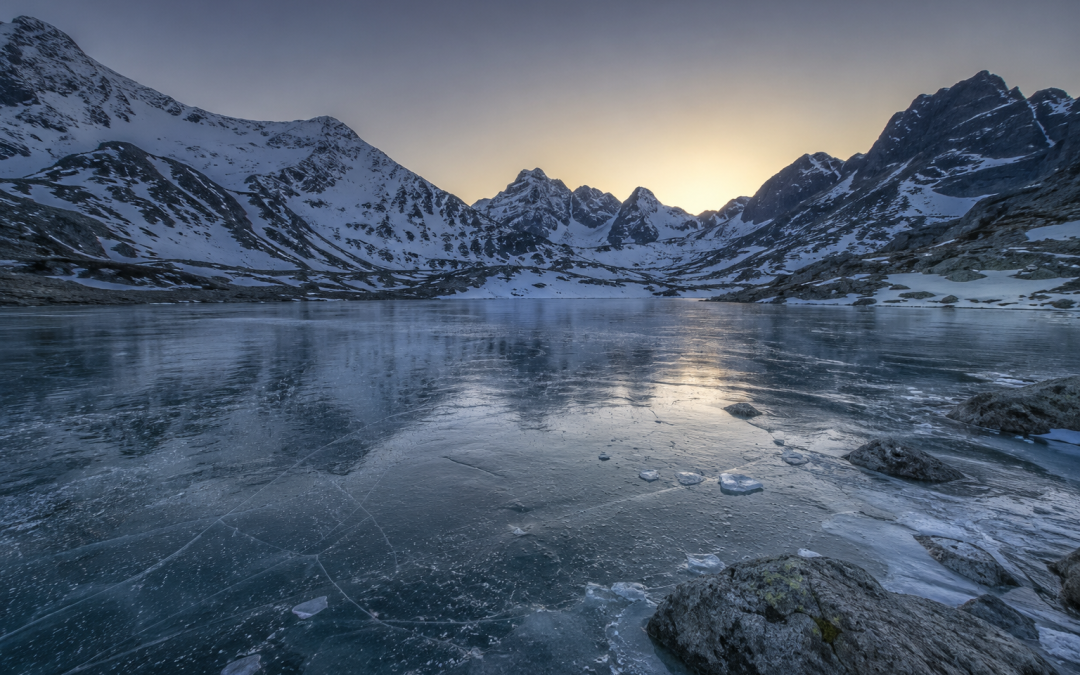
Early spring 2020, I was in Italy for an ice-dragon boat championship, racing on a frozen lake in the mountains with teams from across Europe — a strange sport, dragonboats modified with blades, paddled with a rubber tool that looks more like a toilet plunger than an oar. A teammate cut his hand on the metal blade parts, and I drove him to the nearest hospital, far from the lake. We’d heard about a bad flu moving through the Veneto region, but up in the mountains it felt distant. At the hospital it didn’t — the building was already closed to normal traffic, the emergency department had moved to the basement, and everyone looked scared. Back at the team, people were already talking about a lockdown starting Sunday, the same day as the finals. We got out of Italy only hours before the border actually closed — the same week that added one more to the burnout warning signs I’d already been explaining away for years.
The Call That Monday
My son’s kindergarten director called me. She was on my dragonboat team too. She’d heard where we’d just come back from and asked, gently, if my son could stay home for two weeks, just to be safe. Two weeks turned into a year — the kindergarten closed a few days later, and COVID hit the whole country. Later, once things partly reopened, we had a real choice: kindergarten, or grandparents, who he was already seeing several times a week anyway. We chose grandparents.
Four Years, Not One Trip
That trip is where four years of an already overloaded pattern finally became impossible to keep managing around — not where any of it began. My son was born when I was forty, right as I was starting in the quadrathlon world cup, working from home with what looked like a flexible, manageable schedule: training twice a day around a full workday, family time worked in between, and most nights, once he was asleep, a second work session — sometimes half an hour, sometimes past midnight. On paper it looked manageable. Waking up early to train was the priority. Sleep was not.
The Signal I Didn’t Read
Somewhere in that stretch I developed recurring skin inflammation — flare-ups I suspected were autoimmune but never had properly checked. I still don’t have a clean name for it, because getting one would have meant stopping long enough to find out, and stopping wasn’t something I was doing. I told myself it would go away, and kept pushing. It didn’t. It got worse, on and off, for years, while I kept adding load on top of it.
The Italy trip is where that load stopped being something I could keep managing around. With my son home and grandparents covering only part of the week, and his mother also working, running thirteen training sessions a week simply stopped being possible — there wasn’t enough day left to fit it, and there’s no point racing if you’re not prepared. A few weeks after we got back from Italy, my company laid off most of its external staff and cut hours and pay for the rest. Losing racing and losing part of my income at the same time is what actually gave me room to recover from four years of load. I didn’t choose recovery. Circumstances chose it for me.
What the Nights Actually Looked Like
Work starting around eight, sometimes done before nine, sometimes close to midnight. Not a brutal schedule on paper. But my sleep through it was shallow — skin hurting, waking up a dozen times some nights, rarely a full eight hours in bed and sometimes closer to six, and even trying to fall back asleep ate into that, not actual sleep.
I turn fifty this month. Looking back at those four years, what strikes me isn’t that I trained too much or worked too much — I still do both, plenty. It’s that I had a signal, a real one, on my own skin, for years, before any of the rest of it happened. I didn’t stop racing because I learned something. A pandemic and a layoff did the stopping for me, right when I’d run out of room left to keep avoiding it.
If I could go back, I wouldn’t train less or work less. The body had been reporting the problem for years. I was the only one refusing to read the report. That’s the only thing that’s actually changed.
If you want a structured way to approach this
The Sleep Reset eBook breaks this process down into a clear, step-by-step system. Instead of guessing what matters, it gives you a framework to stabilise your sleep pattern over a short period.
Frequently asked questions
Can chronic stress or sleep deprivation actually cause skin flare-ups?
There’s a real, documented link between poor sleep and inflammation — sleep deprivation is associated with higher levels of inflammatory markers in the body. It doesn’t prove sleep loss alone causes any specific skin condition, but chronic sleep deprivation and unmanaged stress are known to worsen inflammatory processes generally.
What are common burnout warning signs people ignore?
Physical symptoms that get explained away — skin issues, recurring illness, poor sleep quality — are common ones, along with irritability, declining performance despite consistent effort, and a persistent sense of running on empty. The pattern isn’t usually one dramatic sign, it’s several smaller ones dismissed individually over time.
How do you know when training and work load has become unsustainable?
Often the honest answer is that you don’t decide — something external forces the issue, whether that’s an injury, an illness, or a life circumstance that removes the option to keep pushing. Waiting for a personal realization instead of paying attention to the body’s actual signals along the way tends to be the slower, harder path.
Is it common for athletes to keep training through symptoms they should get checked?
Yes — it’s a well-known pattern in endurance sport particularly, where discipline and pushing through discomfort are trained responses. That same instinct that helps in a race can work against a person when it’s applied to an actual health symptom that needs medical attention instead of willpower.