
I’ve tried ice baths in a few different forms. Before or after a sauna, and the more natural version too, swimming in a frozen river in winter. I know the feeling pretty well by now, and I don’t like it. That’s really where this started. It doesn’t work for me, which obviously doesn’t mean it doesn’t work for someone else. So do ice baths actually work? Depends entirely on what you’re asking them to do.
What I Do Instead
What I do instead is much less deliberate. After a hard run, if there’s a river or lake nearby, I’ll often just walk into it. It feels good on the legs, and that’s about as complicated as the decision gets. Cold is relative anyway. Twenty degrees can feel properly cold after a session in air pushing thirty-five and up, while two degrees in winter doesn’t feel quite as absurd when everything around you is already close to freezing. I’m not chasing a particular temperature. I just want something noticeably colder than the effort I have just put into my body.
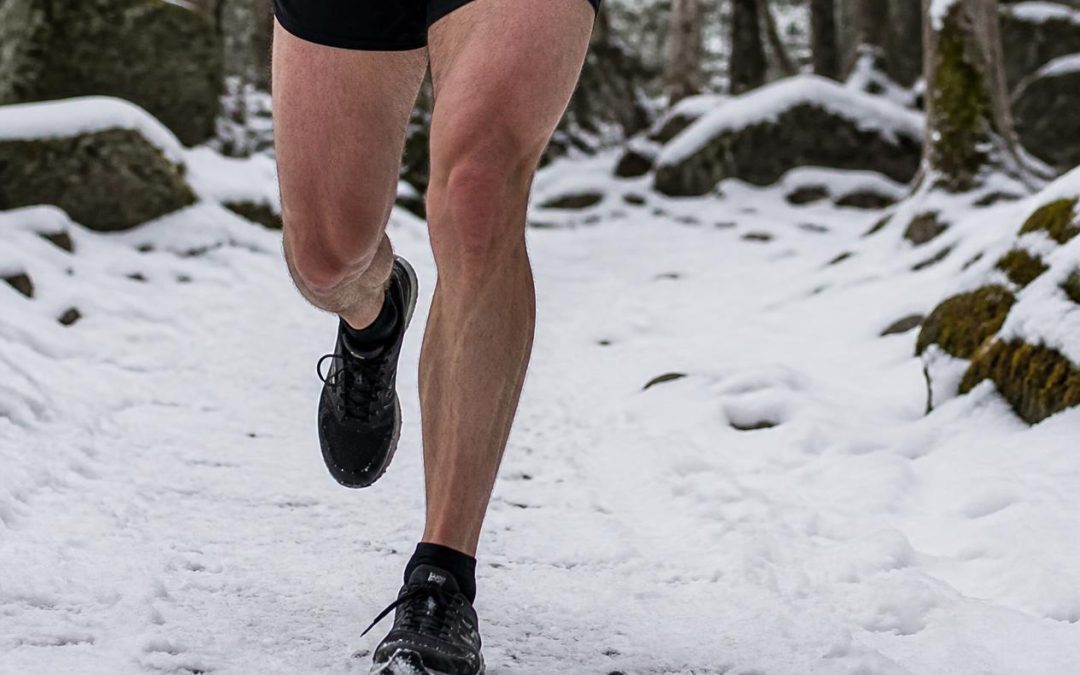
I’ve also spent most of the last years doing something that probably looks a bit strange from the outside: running, hiking and cycling underdressed through winter. Short sleeves, sometimes bare-chested, in temperatures close to freezing, sometimes right at it, wearing much less than I actually need to be comfortable. I’ve never got sick from it. I do feel that I tolerate cold better now and that I handle temperature during exercise better than I used to, but that’s a feeling, not a measurement. I’ve never had my brown fat measured, so I have no idea what exactly is happening inside me. I just know that the same cold that used to feel unpleasant doesn’t bother me as much anymore.
What’s Actually Established
What I notice in myself and what we actually know from research aren’t quite the same thing, and that distinction matters to me.
Brown fat is real, and the body really does increase heat production when exposed to cold. Regular cold exposure can also change the way the body responds to it, and some of the stress response becomes smaller after repeated exposures. That part isn’t particularly controversial anymore. What is much less clear is what happens when you take cold exposure out of a lab and put it into the life of an active person who is already running, cycling, hiking and training most days. There isn’t much research on that exact combination. A recent review in the Journal of Physiology made basically the same point: studies looking at cold exposure on its own, without combining it with exercise or some other intervention, are surprisingly limited.
Strength vs. Endurance — The Research Actually Splits
The ice bath is a different question again. For strength and muscle growth, the evidence is actually fairly convincing that regular cold-water immersion immediately after training can reduce some of the adaptations you’re trying to get from the session. The body needs some of that inflammatory and signalling response to rebuild, and cooling everything down straight after training seems to interfere with part of it. This was already showing up in research around 2015 and has been supported by later work. For endurance training, though, the picture is different. That same penalty hasn’t really shown up in the research, and the short-term things people like about cold water — less soreness, feeling less tired — are real enough, but mostly disappear within a day or two.
There are some other interesting signals too. A 2025 review looking at more than three thousand people found improvements in things like perceived sleep quality and quality of life among people using regular cold showers, and fewer reported sick days. But it didn’t find a clear improvement in immune function, and the authors were pretty clear that the evidence is still not particularly strong. The studies are relatively small, the methods aren’t all the same, and there are still far more things we don’t know than things we do.
The Business Got There Before the Evidence Did
That hasn’t stopped the cold-plunge business from growing fast. The modern version owes a lot to the Wim Hof Method, where cold exposure is combined with breathing and meditation, and then amplified by podcasts, social media and the rather impressive visual effect of a person sitting in a tub full of ice while gasping for air. The global market for cold plunge tubs alone is already somewhere around three hundred and fifty million dollars a year, and most forecasts expect it to keep climbing.
I don’t really have a problem with that. If someone likes sitting in an ice bath and feels better afterward, fine. I just find it useful to separate the experience from the claims made around it. Feeling better after an ice bath is one thing. Saying it dramatically improves immunity, metabolism, longevity, recovery and almost everything else is a much bigger claim, and the research isn’t there to support all of it.
For me the decision is much simpler. I don’t sit in a tub for three minutes because I’ve tried it and don’t like it, and because I’m interested in performance more than in making recovery into another thing I have to do. If I finish a hard session and there’s cold water nearby, I’ll use it. I spend a lot of winter outside wearing less clothing than most people would choose. Sometimes the exposure is deliberate, sometimes it’s just part of being outside.
Maybe that’s enough. After years of doing it, cold doesn’t feel like something I have to overcome anymore. It feels fairly normal.
And that’s probably the part I actually care about. Not whether a three-minute ice bath is going to make me healthier, younger or tougher. I don’t know that it will. I just know that being cold used to be something I avoided, and now I can train in it without really thinking about it.
For me, that’s already a useful adaptation.
If you want a structured way to approach this
The Sleep Reset eBook breaks this process down into a clear, step-by-step system. Instead of guessing what matters, it gives you a framework to stabilise your sleep pattern over a short period.
Frequently asked questions
Do ice baths actually help muscle recovery?
It depends on what you’re training for. For strength and hypertrophy work, regular cold water immersion right after training has been shown to reduce long-term strength and muscle gains. For endurance training, that same negative effect hasn’t shown up in the research.
Is cold water immersion good for the immune system?
A 2025 meta-analysis of over 3,000 people found no significant improvement in immune function from cold water immersion, despite that being one of the most common marketing claims. The same study did find some signal for improved sleep quality and fewer sick days, though the overall evidence is still considered limited.
When did ice baths and cold plunging become popular?
The modern trend traces largely to the Wim Hof Method, which combines cold exposure with breathing and meditation, later amplified by podcasts and social media. The global cold plunge tub market is now estimated at several hundred million dollars a year.
Is regular cold exposure through daily life, like cold water after exercise, different from a dedicated ice bath?
They haven’t really been studied as the same thing. Most cold exposure research isolates either lab-based cold immersion or brief post-exercise cold water immersion; long-term studies on cold exposure woven into an already active lifestyle are much rarer, so the two shouldn’t be assumed to work identically.