
Most people would assume shorter days are the hard part of the year for sleep. This year, for me, it was the opposite. Summer was the season that actually broke things — heat dome sleep disruption, mostly, and everything I had to do about it.
What Summer Actually Cost
I live at roughly the latitude of Seattle, which shouldn’t mean brutal heat, but this year it did — heat domes pushing past 40 degrees, the kind of summer that changed a lot of people’s routines, mine included. I do most of my training outdoors, and I’m sensitive to how much you sweat once real heat sets in, so I had to push my wake time earlier, close to five in the morning, just to get sessions done before the heat arrived. That part wasn’t really the problem. The sun’s already up by five in summer here anyway, so waking that early has never bothered me. The actual problem was the other end of the day. To be up at five, I needed to be in bed by eight and asleep by nine in the middle of summer, it’s still bright outside. The sun sets late, and the air doesn’t really start cooling until well after midnight, which meant running the air conditioning until midnight some nights, sometimes until morning. It’s a noisy thing to sleep through, and for a lot of us in Europe it’s still a fairly new habit — most houses here were never built with active cooling in mind.
Coolcations
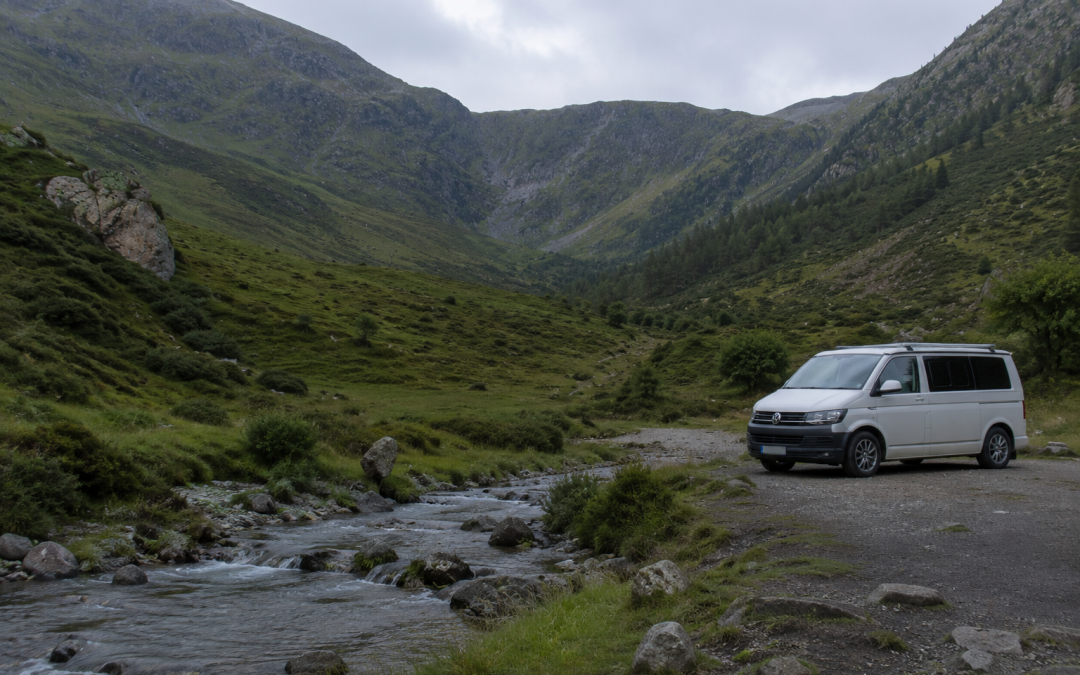
I used to think of myself as a summer person, before my forties. The climate’s changed and so has my life, and somewhere in the last decade summer stopped being the season I looked forward to and became the one I get through. This year that meant spending something like a third of the summer in the mountains — the High Tatras, the Alps — mostly alone, sometimes with my son, occasionally with the whole family. Coolcations, I’ve started calling them: days that let my body actually spend hours outside, even in real sunlight, while still recovering from the harder training sessions I was doing there. The van I live in during summer training camps overheats badly if I leave it sitting in the sun, so finding a cold, shaded canyon or riverside became its own small project. I have favorite spots now, and they’re not just cooler because they’re higher up — they’re deep valleys, mostly on the north side of a mountain, which go dark earlier and stay dark later than anywhere else nearby. It probably sounds like overreacting to shade and darkness. But between long training hours, being genuinely heat-sensitive, and everything else working against sleep in a summer like that, protecting every one of those variables was what actually let me recover properly for the next day. The logistics weren’t small either — drives of five hours or more, rides of similar length. And the trips were never only about staying cool or fitting in training. New places to take in, a kind of input that could substitute for scrolling, and often, since there’s no signal out there anyway, an actual reset for an overstimulated brain rather than just a workaround for the heat.
What Changed by the End of August
By the end of August, it’s already dark by eight. Setting the lighting before bed is entirely on me now instead of the sky doing it for me, and the air’s already cool enough that the AC is off by the time I go to sleep — no mechanical noise, no fighting the temperature, just an ordinary comfortable room. The sun lets me sleep later too. I’m waking around six now instead of five, right around sunrise, into cool air, having actually slept enough.
That extra hour changes more than the wake time. It means I can push training back and spend the first part of the morning with my son instead — a proper breakfast together, a walk along the river before he starts school for the day. September means school starting again, which means helping him get there on time, but it also means my own training shifts from a six or seven a.m. start to something closer to eight or nine — comfortable enough that I’ve actually digested the bigger breakfast we shared an hour or two earlier, running or riding through some of the best color the forest gets all year, still fitting in open-water swims while it’s warm enough, before the dark gets serious again and resets everything once more.
This Morning
I saw how deep that summer habit still runs just this morning. It was my second night home after the most recent mountain trip, and I went to bed when it got dark without checking the clock, then just let my brain fall back asleep until sunrise instead of fighting it. I hadn’t planned that. It’s just the routine that’s still alive in me from summer — dark hours are scarce, protect every minute of them. I ended up sleeping over nine hours without meaning to, and recovering, better than expected, from the hardest training week of the year.
This is honestly still my favorite stretch of the year. Warm enough to swim, warm enough to walk barefoot, but more than that, the days are built at exactly the right length for how I actually want to live — asleep while it’s dark, in a room that doesn’t need to fight the temperature, waking up slowly as the light comes back on its own. Being able to build a life around daylight instead of against it is one of the better things I’ve been handed. Most years I don’t stop to notice that. This year, after a summer like that one, I did.
If you want a structured way to approach this
The Sleep Reset eBook breaks this process down into a clear, step-by-step system. Instead of guessing what matters, it gives you a framework to stabilise your sleep pattern over a short period.
Frequently asked questions
How much does a heat wave actually disrupt sleep?
Research on ambient heat and sleep consistently shows higher nighttime temperatures reduce sleep duration and quality, primarily by delaying sleep onset, with the effect strongest during the warmest months. Indoor bedroom temperature tends to matter more than outdoor temperature for how disrupted sleep actually gets.
Why does hot weather make it harder to fall asleep even with air conditioning?
Air conditioning running through the night often introduces its own disruption through noise and temperature cycling, even while solving the heat problem. It’s a real tradeoff, not a clean fix, especially in homes not originally built for active cooling.
Does the shift into autumn actually improve sleep, or does it just feel that way?
For people whose sleep was being disrupted by summer heat and excess evening light specifically, the drop in temperature and earlier darkness in autumn can genuinely remove the disruption rather than just feeling better by comparison. It’s not universal — for people more sensitive to reduced daylight, autumn can bring its own challenges.
Is it normal to shift training and sleep schedules significantly between seasons?
Yes — many people who train outdoors adjust wake times, session timing, and sleep schedules substantially across the year in response to temperature and daylight, and this kind of seasonal flexibility is common among endurance athletes especially.