
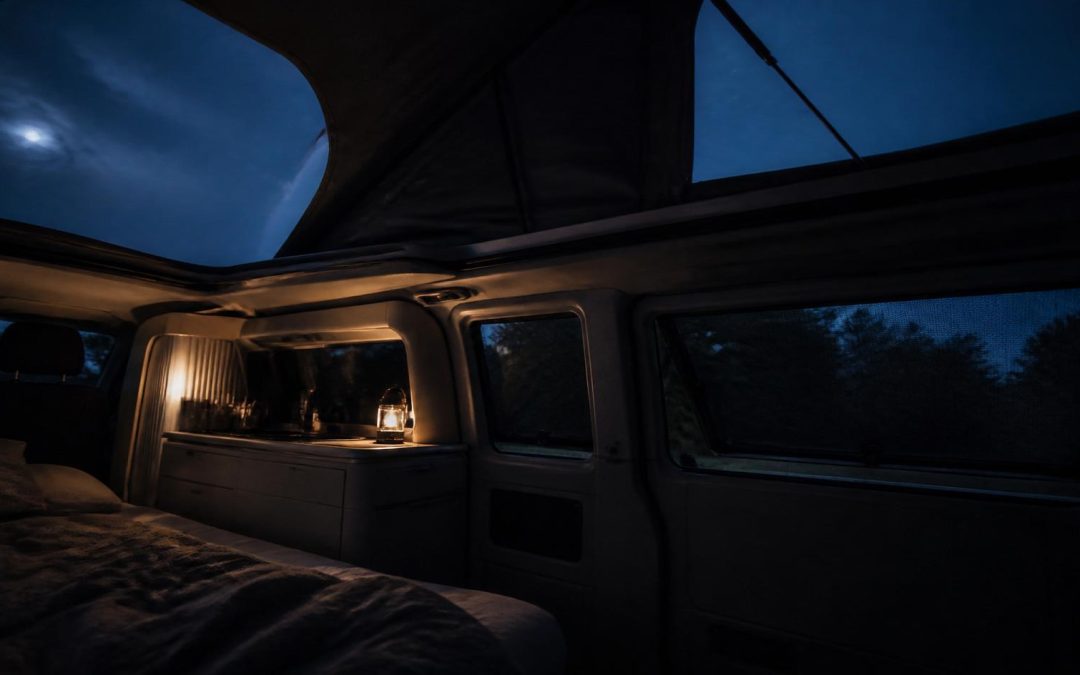
Cross ventilation for sleeping sounds technical. It’s really just two open gaps, one high and one low. On a hot night in the van, I don’t seal it up the way instinct says to for bugs or security. I crack the roof vents — mosquito-netted, so bugs stay out — at the highest point, and open the back door just a few centimeters using a lock built for exactly that, low down on the opposite side. Hot air has somewhere to go. Cool air has somewhere to come in behind it.
I built this arrangement over years of trial and error, mostly just chasing whatever made a hot night more bearable — not so differently from how managing heat with AC and timing came together for me. It wasn’t until I looked into it that I realized I’d been running a smaller, improvised version of something that’s been solving exactly this problem for thousands of years.
A Problem Solved for Centuries
Persian windcatchers — badgirs — work on the same logic, just at the scale of an entire building instead of a van. A tower rises above the roof, air heats inside it and rises, and that upward pull draws cooler air in from below, sometimes routed over an underground pool of water for an extra evaporative kick. Bedouin tents solve the identical problem with almost nothing at all: a black woven roof heats in the sun, the tent doesn’t touch the ground at the sides, and the hot air escaping upward through the loose weave pulls a continuous draft in underneath. Measured against the desert outside, that setup runs 8–10°C cooler inside, with no moving parts and no power source.
It’s Not About the Color
None of it is really about the black fabric — researchers actually tested that idea directly, on skin rather than a tent, and found a black robe traps no more heat than a white one does. The color is a red herring. What matters is the gap: a structure open enough below and hot enough above that air keeps moving through it on its own. My roof gap and low vents are doing the same job a thousand-year-old tent does with a strip of goat hair and some empty space near the ground — the same kind of overheating covered separately in why night sweats happen after 40, just solved from the outside in rather than the inside out.
Why the Shape of the Gap Matters
None of this only changes how hot the van feels, either. A space that’s actually losing heat all night, instead of just holding onto whatever the day left in the cushions and panels, is one where falling asleep doesn’t mean fighting the temperature first. The high, thin gap at the roof solves a second problem at the same time, which is really why I ended up with that specific shape rather than just flinging the roof wide open — most of the obvious ways to let heat out also let in whatever light is around outside, a streetlamp, the moon, an early sunrise through a gap I didn’t think about. Keeping the opening high and narrow lets the air leave without doing the same to the dark.
The Same Trick at Home
I run a version of the same setup at home, on a smaller scale than I’d noticed until I actually thought it through. Two small upper windows in the kitchen and bathroom stay open on hot nights, positioned to pull air in from the north side of the house, which is the shadiest and coolest side by a reliable few degrees. A low fan, kept well away from the bedroom itself, gives the draft a small nudge rather than doing the actual work. Cool air in low, from the coolest available source. Hot air out high, wherever it wants to escape from. Nothing about the mechanism changes between a goat-hair tent in the Sahara and a parked van somewhere new — only the materials do, and the same van that needs this trick most is the one already keeping its own rhythm regardless of where it’s parked for the night.
I didn’t design any of this on purpose. I built it the slow way, one uncomfortable night correcting the setup from the last one, without ever knowing there was already a name for what I’d landed on.
If you want a structured way to approach this
The Sleep Reset eBook breaks this process down into a clear, step-by-step system. Instead of guessing what matters, it gives you a framework to stabilise your sleep pattern over a short period.
Frequently asked questions
What is cross ventilation and how does it help with sleep in the heat?
Cross ventilation means opening two points at different heights — one low, one high — so warm air naturally rises and escapes through the upper opening while cooler air is drawn in through the lower one. It requires no power and can meaningfully reduce indoor temperature compared to a fully sealed space.
Does a black tent or black roof actually make a space hotter?
Not necessarily. Research testing black versus white fabric on skin found no significant difference in heat gained. What actually determines temperature in structures like Bedouin tents is the airflow created by the gap between the roof and the ground, not the color of the material.
How can I set up cross ventilation for sleeping in a van or camper?
Open a vent or window at the highest point available and a second opening lower down, ideally on the opposite side, before it gets fully dark so the temperature difference can start driving airflow early. Keeping the upper opening narrow can help limit how much outside light gets in along with the air.
Is natural ventilation as effective as air conditioning for sleeping in heat?
It won’t match mechanical cooling in extreme heat, but it can meaningfully reduce indoor temperature at no energy cost, and works well as a complement to other heat-management approaches like timing meals, training, and showers around the evening.