
It’s never one thing. A warm night that bites into my sleep can already knock down my motivation for the next day. A hard training session where the effort felt bigger than it should have. A video or article I put out that gets almost no reaction. An argument with someone close to me. None of these is a problem by itself. A few of them together, though, and I start losing focus. I start asking myself why I’m doing any of the harder things in my life, when none of it is obligatory, and some days it isn’t even fun. I didn’t always call this pre-race anxiety, but looking back, that’s usually exactly what it was becoming.
What Follows Is Predictable
I read the news for no real reason. I eat a bit more than I need to. I scroll for the kind of video that gives a quick hit — dopamine, for what I half-jokingly call my ADHD brain. I look for something easier than whatever I was supposed to be doing. Usually it clears with the next good night’s sleep. Sometimes it runs for days.
I’ve learned not to make big decisions in that state. That’s probably one of the more useful things I’ve learned from training for a long time. When the body is tired and the head is overloaded, everything starts looking like a bad idea. The work feels pointless, the training feels unnecessary, even things I normally enjoy start looking like obligations I somehow agreed to for no good reason. Sometimes nothing in my life actually needs changing. I just need to stop adding load.
When It Lands in Race Week
The problem is when those days land in race week. By then I’ve already put in the training. I still need to pack for the travel, get ahead on work to cover the weekend I’ll be gone, and find time with my son before I leave. All of it stacks on top of whatever else already knocked me off balance, and it becomes too much. I start losing the actual reason I’m doing any of this, when life could just be simple.
Then there’s a few hours, sometimes a full day, of driving to get there. The driving itself is boring, and boredom makes the craving worse — sugary things mostly, which at least isn’t bad the day before a race, plus more scrolling, and a specific fantasy that shows up every time: fishing alone on some abandoned river somewhere, nobody around, nothing to prove.
I’ve had that fantasy often enough that I don’t really see it as wanting to quit anymore. It’s more like my brain asking for the opposite of what I’ve been giving it — a pull that’s closer to reward-seeking than an actual wish to change my life. No schedule, no performance, no decisions, no one needing anything from me. Just sitting somewhere and watching a float. It doesn’t mean I actually want to spend the rest of my life fishing. It usually means I’ve had enough inputs.
The Start Line
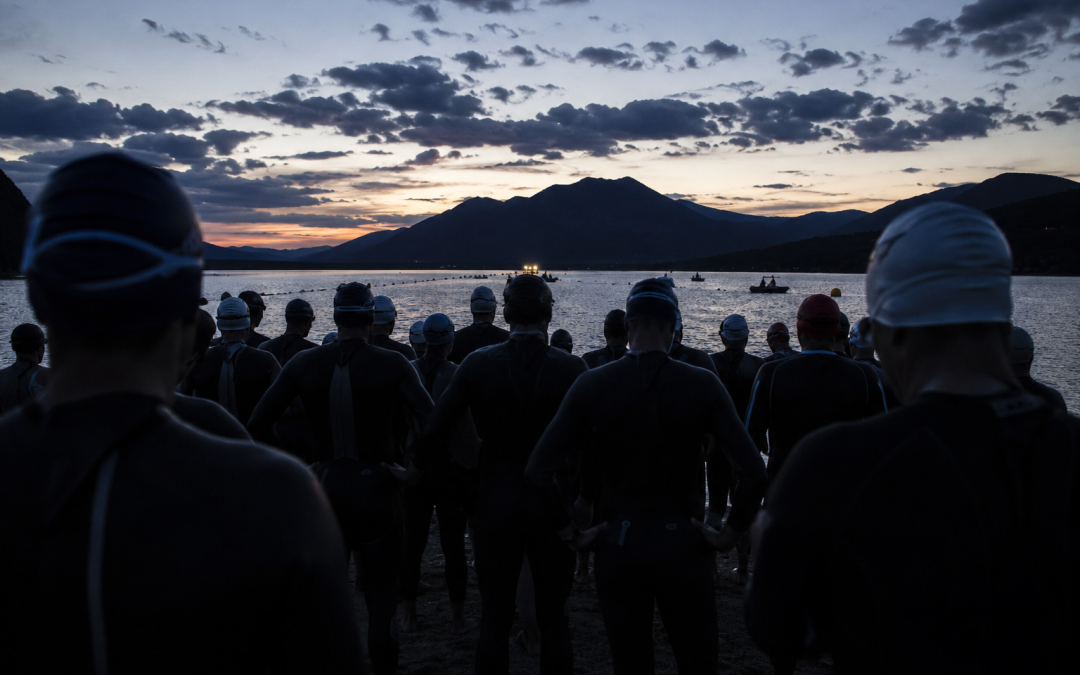
At the start line, it’s always some version of the same thought. What am I doing here. I don’t feel good. The music’s too loud. I just want to lie down. And depending on the conditions — cold water, a strong current, legs already tired by the time I’m on the bike or in the kayak — that feeling can hang on for a good part of the race.
I’ve had enough bad nights before races now that I don’t automatically believe the feeling anymore. A terrible night can feel like a terrible race before the race has even started — I’ve written before about the World Championship where I was sure of exactly that, and raced normally a few hours later anyway. The body doesn’t always get the memo from the brain.
When It Flips
But usually, somewhere around the second half, it flips. I notice I’m actually racing — against other people, past people cheering — and somewhere in there, quietly, I start enjoying pushing a tired, suffering body, especially on the run. That part I’d never admit to anyone at the start line. It’s only true once I’m already in it.
I think that’s also why I still do it. The beginning is often about convincing myself to start. The middle is where the decision disappears and there’s only the thing itself. Swim. Bike. Kayak. Run. Eat. Drink. Move. Respond to whoever is around me. There isn’t much room left for the question of whether any of it is worth doing.
And sometimes the race doesn’t go well. That’s important too. I’m not trying to turn every difficult start into a story about overcoming the mind. Sometimes the body is genuinely not ready. Sometimes the weather is terrible. Sometimes the training wasn’t enough. Sometimes I simply had a bad day. The useful part is learning which one it is instead of treating every bad feeling as the same thing.
What I actually feel by the end isn’t relief that it’s over. It’s gratitude — that in my forties, heading toward fifty, I can still swim and run without anything holding me back, and that I’ve had the time and the health to get myself there in the first place. The race stops being something to finish and becomes something closer to the opposite: a place to feel lucky in, to go through something hard on purpose, and to come out the other side with people who did the same thing next to me — a medal if there is one, but really just having gone through it.
The strange part is that the fishing fantasy usually disappears by then. I don’t need the abandoned river anymore. I just needed to remember why I was there.
If you want a structured way to approach this
The Sleep Reset eBook breaks this process down into a clear, step-by-step system. Instead of guessing what matters, it gives you a framework to stabilise your sleep pattern over a short period.
Frequently asked questions
What causes pre-race anxiety in experienced athletes?
It’s rarely one trigger — usually a stack of smaller things arriving close together: poor sleep, a harder-than-expected training session, unrelated life stress, or simply accumulated fatigue. Experience doesn’t remove pre-race anxiety, it just makes the pattern more recognizable when it starts.
Is it normal to lose motivation right before a race you’ve trained hard for?
Yes, and it’s a common enough pattern that it’s worth not overreacting to. Motivation dips are often a signal of accumulated load rather than a sign the goal itself was wrong — the useful move is usually to avoid big decisions until the feeling passes rather than acting on it immediately.
Why does a bad night’s sleep before a race feel worse than it actually is?
A poor night can create a strong expectation of a bad performance the next day, but perceived readiness and actual physical readiness don’t always match. Plenty of athletes race normally, or even well, after a night they were certain had ruined everything.
Does pre-race anxiety usually go away once the race starts?
Often, yes — many athletes report the anxious, reluctant feeling fading once the event is underway and attention shifts to the task itself rather than the anticipation of it. It’s not universal, though, and sometimes a difficult start really does reflect a body or day that wasn’t ready, which is worth being honest about rather than assuming it’s always “just in the head.”