
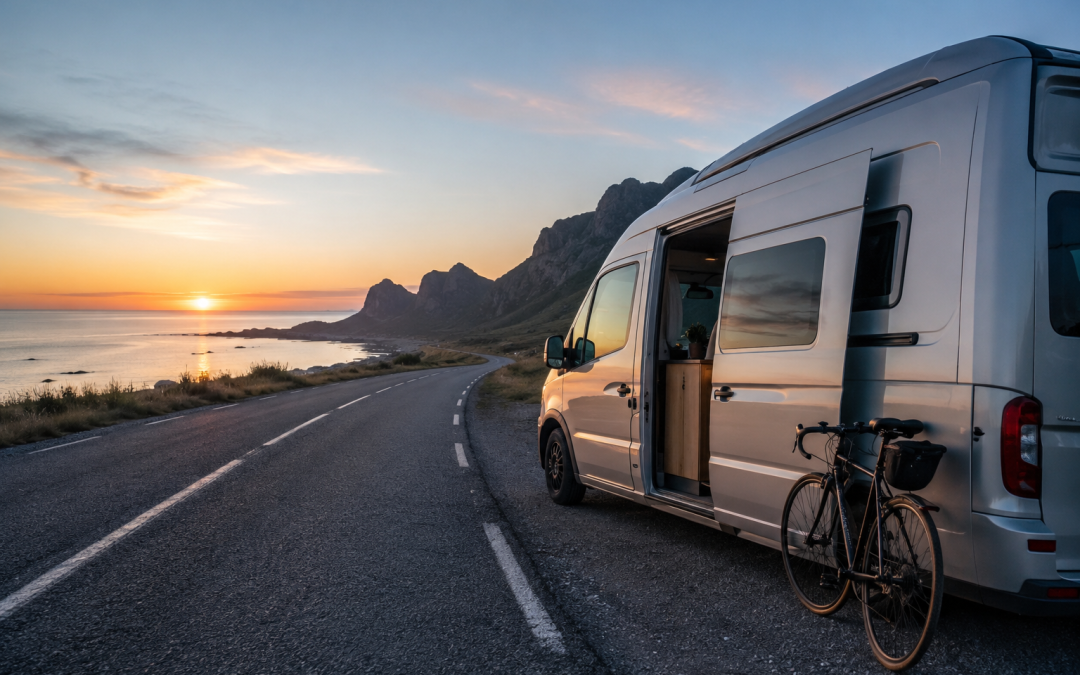
Eight years ago we drove into Montenegro on roads narrow enough that a herd of goats around any blind corner was the normal hazard, not the surprising one. We’d flown in and rented a car, and even then it was hours of mountain driving to get anywhere.
Deserted beaches on one side of the country, roads into neighboring Albania that made ours look easy on the other. A small country with more history and terrain than a two-week trip could reasonably hold, and I was determined to hold all of it anyway.
Training Didn’t Take a Holiday
I’d just started finishing near the podium in quadrathlon, so training wasn’t optional, holiday or not — the same commitment behind what I later wrote about in training after 40, when the plan stops being fixed and starts being a suggestion you argue with daily. I ran while my son slept through the hottest part of the afternoon. I swam whenever we were near water. On the long walks, when he got tired, I carried him — fifteen kilos of dead weight on my back or hip, which is its own kind of training if you don’t think about it too hard. Underneath all of it was a rule I never said out loud but followed anyway: see what a local would see. Eat where locals eat, not where the guidebook sends you. Walk the backstreets, but still stand at the famous viewpoint everyone comes for, because skipping it felt like admitting defeat. Nothing was allowed to be missed.
The mornings all looked the same after that. Tired down to the bone — the kind of fatigue that doesn’t resolve in one good night once a trip has already knocked sleep timing off course, which is really what I got into separately in why holidays disrupt your sleep more than you think — and I’d start the day with a large breakfast anyway, then a long walk or a run, then eat again, then keep going. Rest when you get home, rest when you’re dead — that was the actual internal logic, not a joke I told myself afterward. It didn’t feel like overdoing it at the time. It felt like getting my money’s worth.
What My Son Actually Wanted
What changed wasn’t a decision. It was my son getting too big to carry, and around the same time, developing firm opinions about what a holiday was actually for. He wanted playgrounds. He wanted to watch some unfamiliar animal do absolutely nothing for twenty minutes until it wandered off. He wanted to pet every cat and dog we passed, which in some of these countries is most of them. None of that fit into a schedule built around covering ground. I couldn’t carry him through it anymore — and even if I still could have, he didn’t want to be carried through it. He wanted to stop and watch the animal.
Two Kinds of Holidays Now
So the holidays split into two kinds, and I’ve made peace with both. The ones with my son are slower now — shorter drives, closer countries, mornings kept for whatever training fits around him rather than the other way around, enough unscheduled time that he can actually absorb what he’s looking at instead of being walked past it. That part isn’t so different from what I learned writing about social jet lag on weekends — the body doesn’t care whether the schedule drift is a Saturday lie-in or a holiday itinerary, it reacts to the inconsistency either way. The ones without him haven’t slowed down at all. When it’s just me, I still plan a trip the way I did in Montenegro — long days, as much ground as I can cover, nothing left unseen if I can help it.
The Rule That Doesn’t Move
What’s different isn’t how much I try to fit in. On the solo trips I try to fit in just as much as I did eight years ago, maybe more. What’s different is what I’m willing to give up to do it. In Montenegro, covering more ground meant driving through the hours I should have been asleep and eating whenever the day allowed instead of on any schedule — the ambition set the terms for everything else. Now, however much ground I decide to cover, I wake up and go to bed at the same times I would at home, and I eat on a rhythm the day has to work around rather than the reverse. A National Sleep Foundation consensus panel reviewing decades of research came to a similar conclusion — consistent sleep and wake timing tracks with better outcomes across nearly every measure they looked at, independent of how many hours you actually get. The ambition still changes shape depending on who’s with me. The rhythm doesn’t move at all anymore, regardless.
It’s the same unglamorous consistency I wrote about in the one sleep habit that actually stuck — not the most sophisticated fix, just the one I never stopped doing. And it took longer than it should have to actually believe it mattered, which is its own version of understanding a problem without yet acting on it.
I never actually stopped wanting to see and do everything. I just stopped paying for it with the days that followed.
If you want a structured way to approach this
The Sleep Reset eBook breaks this process down into a clear, step-by-step system. Instead of guessing what matters, it gives you a framework to stabilise your sleep pattern over a short period.
Frequently asked questions
Does it matter what time I go to bed and wake up when I’m on vacation?
Yes. Research reviewed by a National Sleep Foundation consensus panel found that consistent sleep and wake timing is associated with better outcomes across alertness, cardiovascular health, and mood, regardless of total hours slept. Shifting bedtime and wake time by several hours on a trip has effects similar to changing time zones, even if you never leave your own.
Can I stay physically active on holiday without wrecking my sleep?
Generally yes, as long as the activity happens within a schedule that still allows a consistent bedtime and wake time. The problem isn’t the training or the walking distance — it’s when exertion pushes eating, driving, or sleep into hours the body isn’t expecting them.
What is social jet lag, and does it apply to vacations?
Social jet lag describes the mismatch between your body’s internal clock and the sleep-wake schedule your life actually follows, usually discussed in the context of weekday-versus-weekend sleep. The same mismatch shows up on holidays when travel, sightseeing, or late dinners push sleep timing later than usual, and it produces a similar cost on return.
How do I keep a consistent sleep schedule while traveling or camping?
The simplest approach is treating wake time and bedtime as fixed points regardless of location, then building the day’s activities around them rather than the reverse. This holds whether you’re in a hotel, a tent, or a campervan parked somewhere without a fixed schedule to anchor to.