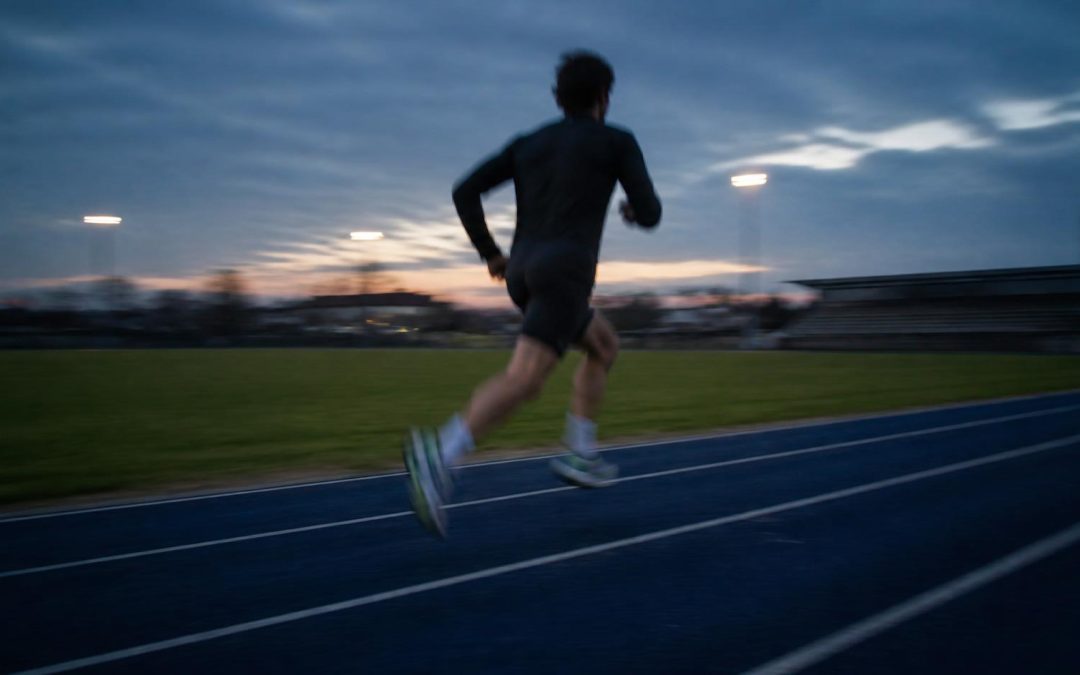
Sleep after hard training isn’t one-size-fits-all. A four-hour ride in zone one or two barely registers as a load worth protecting sleep for — a night a little shorter than usual absorbs it without complaint. Twelve repeats of 800 meters above threshold, close to max heart rate, is a different animal entirely. That session has a real, measurable cost, and if the sleep after it doesn’t match that cost, my watch has a blunt, one-word verdict waiting the next morning: unproductive. Not tired. Not slower than usual. Unproductive — meaning the effort I put in the day before didn’t translate into anything the body actually kept, which is the same blunt trust I described in what my watch tells me every morning.
Knowing Before I Check the Number
I usually know which category a night fell into before I even check the number, because the feeling is specific. Everything is sore in a way that doesn’t match how hard the actual effort was. A short, easy walk feels like it should count as a session. There’s a flat, low-grade unwillingness to do anything at all, distinct from ordinary tiredness — less “I’m sleepy” and more “nothing sounds worth doing today.” That combination, more than the number on the watch, is usually the clearest sign that whatever training I did is still sitting there unfinished, waiting on a night it never got — not so different from the distinction between being physically tired and being unable to switch off that I got into separately in My Legs Could Always Rest Between Sports.
What’s Actually Happening Overnight
The mechanism behind the verdict isn’t mysterious, even if it isn’t the whole story. One of the largest single releases of growth hormone in a twenty-four-hour period happens during slow-wave sleep, mostly within the first couple of hours after falling asleep, and growth hormone is one of the signals that tells muscle tissue to start rebuilding what a hard session just broke down at the microscopic level — alongside protein synthesis, glycogen restoration, and the nervous system settling back down, all of which are doing their own share of the work at the same time. Research on sleep and athletic recovery backs this up: cut that window short, or fragment it enough that the deepest stages barely happen, and the rebuilding simply doesn’t get the full signal it needs. It’s also part of why anything that disrupts deep sleep specifically matters more than it might seem — even something like an evening drink can blunt exactly the stage this repair work depends on.
When the Damage Doesn’t Get Converted
A session big enough triggers something with real overlap to what an infection does, without actually being one. Inflammatory markers rise. Immune cells mobilize. The body temporarily reallocates resources the same broad way it does when it’s fighting something off, just triggered by effort instead of a pathogen. Not a fever. Not actually sick. But recognizably the same category of systemic response, which is exactly why it needs the same category of resource afterward — real, uninterrupted recovery, not just less soreness.
Stack enough of those nights on top of each other and the math stops being neutral. A hard session creates real, if small, damage on purpose — that’s the actual mechanism training runs on, the same logic behind why a training plan has to bend around recovery signals rather than the other way around. Recovery is supposed to turn that damage into an improvement. Without it, the damage just accumulates instead. Enough of that and fitness doesn’t just stall. It goes backward, because the body is absorbing load faster than it’s being allowed to convert any of it into anything useful.
The watch isn’t really judging yesterday’s workout. It’s judging whether last night was good enough to make yesterday worth doing.
If you want a structured way to approach this
The Sleep Reset eBook breaks this process down into a clear, step-by-step system. Instead of guessing what matters, it gives you a framework to stabilise your sleep pattern over a short period.
Frequently asked questions
Does all training need the same amount of sleep afterward?
No. Low-intensity, steady-effort sessions place relatively little systemic load on the body and can be absorbed with a slightly shorter night. High-intensity or long, demanding sessions create a much larger recovery debt and depend far more heavily on getting a full, uninterrupted night afterward.
What does it mean when a fitness watch says a training session was “unproductive”?
Most training-status algorithms compare recent training load against recovery markers like HRV and sleep. An “unproductive” reading typically means the body hasn’t recovered enough from recent load for the training to be building fitness — the stimulus was applied, but the adaptation hasn’t caught up yet.
Does hard exercise really trigger an inflammatory response like an illness?
Yes, to a meaningful degree. Intense or unfamiliar exercise causes measurable increases in inflammatory markers and immune cell activity, similar in category (though not in severity or cause) to the body’s response to a mild infection. This is a normal, expected part of the training-adaptation process.
How does sleep help muscles recover after intense training?
Sleep supports muscle recovery through several overlapping mechanisms: growth hormone release (concentrated in slow-wave sleep), ongoing protein synthesis, glycogen restoration, and autonomic nervous system recovery. Shortening or fragmenting sleep after a hard session can blunt several of these processes at once.