Most advice about alcohol and sleep lands in one of two places: stop drinking entirely, or reassure yourself that moderate drinking is fine. Neither is particularly useful for men who train seriously, track their recovery, and want to make an honest calculation rather than follow a rule.
Alcohol affects sleep quality in specific, measurable ways — and timing matters significantly more than most people account for. This is what the disruption actually looks like, how to read it in your own data, and how to decide when a drink is worth it and when it isn’t.
What alcohol actually does to sleep architecture
Alcohol does not prevent sleep — it often accelerates it, which is why it feels like a relaxant. The problem is what happens in the hours that follow. In the first half of the night, when slow-wave deep sleep should dominate, alcohol disrupts the architecture. Not with overheating the way a late meal does, but with fragmentation. The first few hours of sleep, which should be the deepest and most uninterrupted, become lighter and more easily disturbed.
The result is waking more frequently in the first half of the night — sometimes every hour — feeling thirstier than usual, and more prone to snoring as throat muscles relax further than they should. The second half of the night often involves more REM sleep than normal as the body attempts to compensate, which can produce vivid dreams and an unrestful feeling on waking despite adequate hours in bed.
This disruption occurs regardless of what you are drinking. A quality wine produces the same architectural interference as a cheap lager. The slow-wave deep sleep that already compresses naturally after 40 is particularly vulnerable — alcohol removes some of what little margin remains.
Why timing matters more than quantity
The gap between consumption and sleep is the primary variable. One drink at 3pm, with sleep at nine, gives the body six hours to process most of the alcohol before sleep architecture is significantly affected. One drink at 7pm, with sleep at nine, lands differently — the body is still processing when the first sleep cycles begin, and the fragmentation is reliable and measurable.
The closer to sleep, the worse the first half of the night. Two drinks compounds the effect significantly — enough to produce a measurable drop in HRV the following morning and warrant reconsidering the next day’s training load. According to the Sleep Foundation, even moderate alcohol consumption within a few hours of bedtime reduces sleep quality and suppresses REM sleep in the first half of the night, with effects scaling with the amount consumed and the proximity to sleep onset.
One drink at 3pm can produce a noticeable effect but doesn’t always. One drink at 7pm reliably shows up in the data for most men who track. Sleep tracking makes this relationship visible in a way that subjective experience alone often misses — because alcohol frequently makes falling asleep feel easier, which obscures the damage it is doing to the hours that follow.
Reading the data honestly
One beer consumed within a few hours of sleep typically produces the worst HRV reading of the preceding seven days — not dramatically, not into the range that suggests illness or overtraining, but consistently lower than baseline. The sleep score reflects the same pattern. Two drinks produces a more significant drop — enough to reconsider the following day’s training plan rather than pushing through a session the system hasn’t recovered from.
The tracking doesn’t reveal anything that careful subjective attention couldn’t eventually identify. But it removes the temptation to rationalise. When the feeling of relaxation from alcohol makes the evening feel like rest, the morning data provides a more accurate account of what actually happened overnight.
This is where understanding the mechanism is not the same as having a system that accounts for it. Most men know alcohol affects sleep. Fewer have a reliable personal rule for when it is and isn’t worth the cost — and fewer still track consistently enough to know what their own threshold actually is.
The calculation worth making
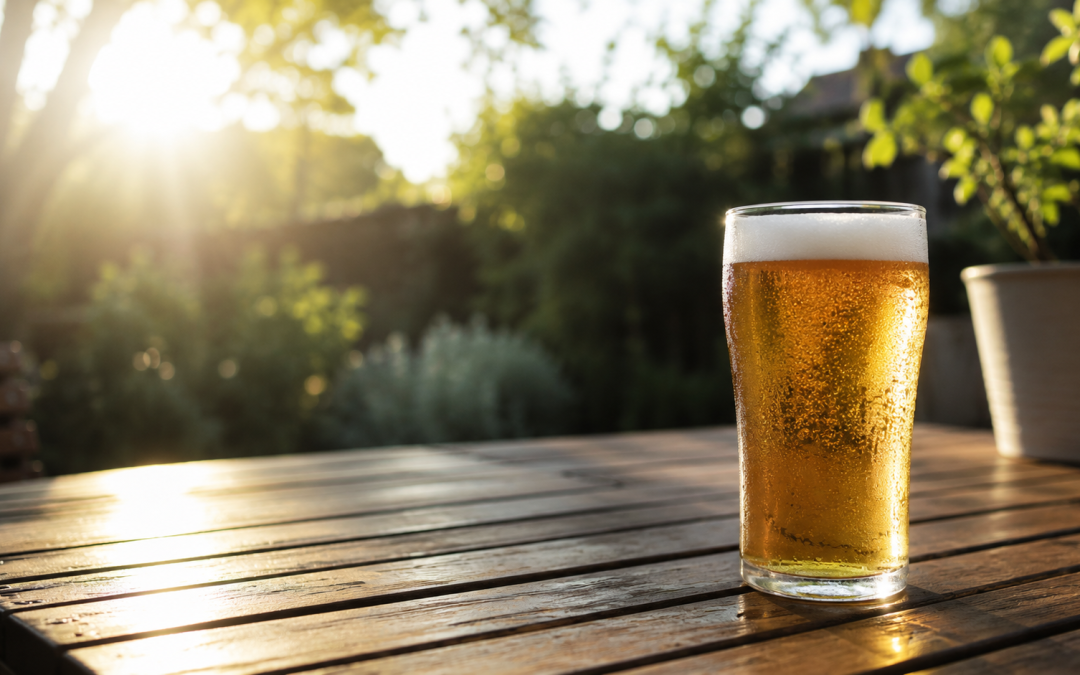
The approach that has worked longest is not a rule about alcohol. It is a cost-benefit calculation made honestly each time. If nothing important is scheduled the following day — no training that matters, no work requiring full capacity — and a cold beer in summer heat sounds genuinely good, the answer is yes. If it could cost something that matters — a training session, a focused morning, the ability to drive — the answer is no. Not as discipline. As a calculation made enough times to trust automatically.
Timing is the primary lever. Drinking early in the day — after a hard morning session, in summer heat, with several hours before sleep — produces a different outcome than drinking in the evening. The former can be enjoyed without significant sleep cost. The latter reliably produces one. A stable sleep system built around consistent inputs can absorb an occasional early drink without structural damage. An evening drink undermines the same system at its foundation.
One pack of beer lasting more than a month is not abstinence. It is a considered relationship with something that has a real cost — enjoyed when the conditions are right, skipped when they aren’t. That calculation is available to anyone willing to make it honestly.
If you want a sleep system that can handle real life
The Sleep Reset eBook breaks this process down into a clear, step-by-step system. Instead of guessing what matters, it gives you a framework to stabilise your sleep pattern over a short period.
Frequently asked questions
Does alcohol affect sleep quality even in small amounts?
Yes — even one drink consumed within a few hours of sleep measurably disrupts sleep architecture in most people who track consistently. The primary effect is fragmentation of slow-wave deep sleep in the first half of the night. The body falls asleep more easily, which masks the disruption, but the deep sleep that should dominate the early cycles is lighter and more interrupted than normal. The effect scales with proximity to sleep onset and quantity consumed.
How long before bed should you stop drinking to protect sleep quality?
A general guideline of four to six hours before sleep gives the body enough time to process most of a single drink before the first sleep cycles begin. One drink at 3pm with sleep at nine produces a different outcome than one drink at 7pm with the same sleep time. Individual metabolism varies, but the closer to sleep, the more reliable the disruption. Men who train seriously and track HRV typically see a consistent pattern in their own data within a few weeks of paying attention.
Does the type of alcohol matter — wine versus beer for example?
The type of drink matters less than the alcohol content and the timing. A quality wine produces the same sleep architecture disruption as a beer of equivalent alcohol content. The mechanism — fragmentation of slow-wave sleep and suppression of early-night REM — is driven by alcohol itself, not by other compounds in the drink. Sugar content in mixers can add a secondary effect through blood sugar fluctuation, but the primary variable remains the alcohol and when it was consumed.
Can you drink occasionally without it affecting training recovery?
Yes, if the timing and quantity are managed deliberately. One drink consumed early in the day — several hours before sleep, after training is complete — produces a meaningfully different outcome than one drink in the evening. The cost-benefit calculation changes depending on what is scheduled the following day. A hard training session or demanding work morning makes the evening drink not worth it. A genuinely light following day changes the equation. Tracking sleep and HRV consistently makes the personal threshold visible rather than theoretical.