“Are you an Ironman?” I’ve been asked some version of this question for a decade, whenever someone finds out I race multisport. No, I always say. I race quadrathlon mainly — triathlon with a kayak leg added — and for training and preparation, some Olympic and half-distance triathlon too. Oh, what a shame, they usually say next. I have a buddy who already did the full distance. Congrats, I answer, and that’s usually how the conversation ends. There’s no good way to explain, without sounding defensive, that preparing to run a genuinely quick mile can be harder than preparing to shuffle through a long distance just before the cutoff. So I don’t bother trying. Ironman training and sleep would end up being far more connected than I expected when this all started.
What Actually Changed My Mind
The idea itself had been sitting in my head for well over a decade anyway. I’ve raced Ironman-length events as part of relay teams, and shared a course with long-distance triathletes at quadrathlon world championships. It just never fit my actual training plan — quadrathlon races run short and frequent across a whole season, which is a completely different shape of preparation than building toward one long day.
What changed it was my skin. Last summer my autoimmune condition got bad enough that I needed to see a specialist, and he told me to stop any training that involved getting wet — my skin barrier function was too weak to handle it. So I quit swimming, quit kayaking, and with both of those gone, nearly all of my structured training went with them. I spent that stretch hiking in the Alps instead, avoiding the hottest hours, barely training in any real sense. By autumn my skin had settled down enough that I started running again, two or three times a week, just to stay in some kind of shape, and walking fifteen to twenty thousand steps most days, because I had more energy than I knew what to do with.
Where the Energy Actually Came From
Where that energy actually came from took a while to notice. As the skin improved and my attention shifted toward recovery generally, my sleep got a lot better along with it. By this spring, somewhere around the end of April, I felt genuinely understressed — my life and health issues were mostly sorted, my mind was clear of the anxiety that used to run underneath everything, and I had real energy to spend. That’s roughly when I started this newsletter, and around the same time I went looking for a physical challenge to put my body toward. I’d been training two to four hours a week and walking a lot. I decided to test myself against a training volume I hadn’t touched in decades.
Twenty Hours a Week, and the Part That’s Actually Hard
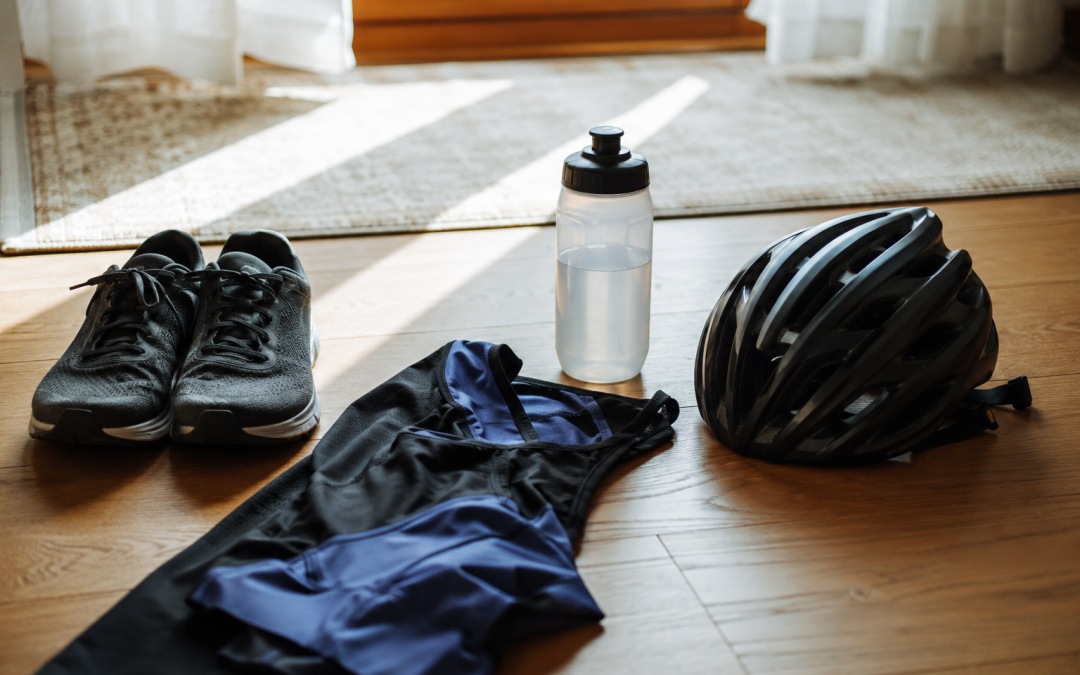
Picking cycling back up and pushing running volume hurt for weeks — I was testing what my joints and tendons could still handle after years away from that kind of load. Ten to twelve hours a week felt fine at first. Then fourteen, then fifteen. Some weeks now go past twenty. But training hard, or training a lot, has always been the easier half of this. Aerobic capacity and muscle adapt fast. Joints and Achilles tendons adapt much slower, and at this volume, sleep stops being something that can be occasionally fine — it needs to be genuinely good, above eighty or ninety on the tracker, every single night, not most nights.
That’s the part that’s hard to balance in practice. A family trip, even with training scaled back, paired with a few nights of below-average sleep — not bad, just not good — and I have to pull the training back immediately. I’ve tried forcing through it before, and it’s never gone well. The extra load just accumulates quietly until one morning I wake up questioning the entire point of what I’m doing.. That feeling is the actual signal — not a number on a screen, that specific waking-up-and-wondering-why feeling — and it means a short recovery session, thirty minutes, easy, and then a day or two of doing almost nothing.
The Road to the Start Line
Four months into this now, I’m still adding training hours, building the aerobic base, and working through the idea that I was never built for long distances. I was. I’d just never tested it. There’s a year left before my actual debut, with real markers along the way — a sub-one-thirty half marathon this autumn, a full marathon done comfortably by spring, some warm-up races before the real season, then a long summer of building toward the start line itself.
The swim is its own separate problem. An Ironman opens with over an hour in the water, and my skin still limits how much of that I can safely prepare for — some specific strength work, occasional open-water swims in alpine lakes or the Danube, maybe two or three pool sessions across the whole winter, which is roughly the ceiling my skin tolerates right now. It’s actually part of why Ironman made more sense than another kind of challenge. Swimming is a small share of the total distance, so as an average swimmer, getting through it in eighty or ninety minutes and putting the real effort into a faster bike and run is a workable plan for a debut season. In quadrathlon, and in most shorter multisport formats, swimming makes up a much bigger share of the race, which would mean far more pool time than my skin currently allows.
Quadrathlon is still the first love, though. I’ll be back at a few World Cups next year — for the fun of it, not for the medals. But for now, the discipline that’s actually running this whole project isn’t the training volume. It’s the same one that helped fix my skin in the first place: protect the sleep, or none of the rest of it holds.
If you want a structured way to approach this
The Sleep Reset eBook breaks this process down into a clear, step-by-step system. Instead of guessing what matters, it gives you a framework to stabilise your sleep pattern over a short period.
Frequently asked questions
How much sleep do you need when training for an Ironman?
There’s no universal number, but athletes training at high weekly volumes generally need more consistent, higher-quality sleep than casual exercisers, since recovery capacity becomes the limiting factor rather than fitness itself. Tracking trends over time tends to be more useful than fixating on any single night’s score.
Why do tendons take longer to adapt to training than muscles?
Tendons have limited blood supply and lower metabolic activity compared to muscle tissue, which means they remodel and strengthen at a meaningfully slower rate. This is a well-documented reason why rapid increases in training volume raise injury risk even when cardiovascular fitness feels ready for it.
How much of an Ironman triathlon is swimming?
The swim leg is 2.4 miles (3.86 km) out of a total race distance of 140.6 miles, making it a relatively small proportion of the overall event compared to the bike and run legs. This is part of why some athletes who are average swimmers but strong cyclists and runners are still able to compete effectively.
Is it normal to need to reduce training after a few nights of poor sleep, even without illness?
Yes — accumulated sleep debt affects recovery capacity even in the absence of injury or illness, and many endurance athletes report needing to scale back training load specifically in response to sleep quality rather than just training stress. Ignoring the signal and pushing through is commonly reported as counterproductive.